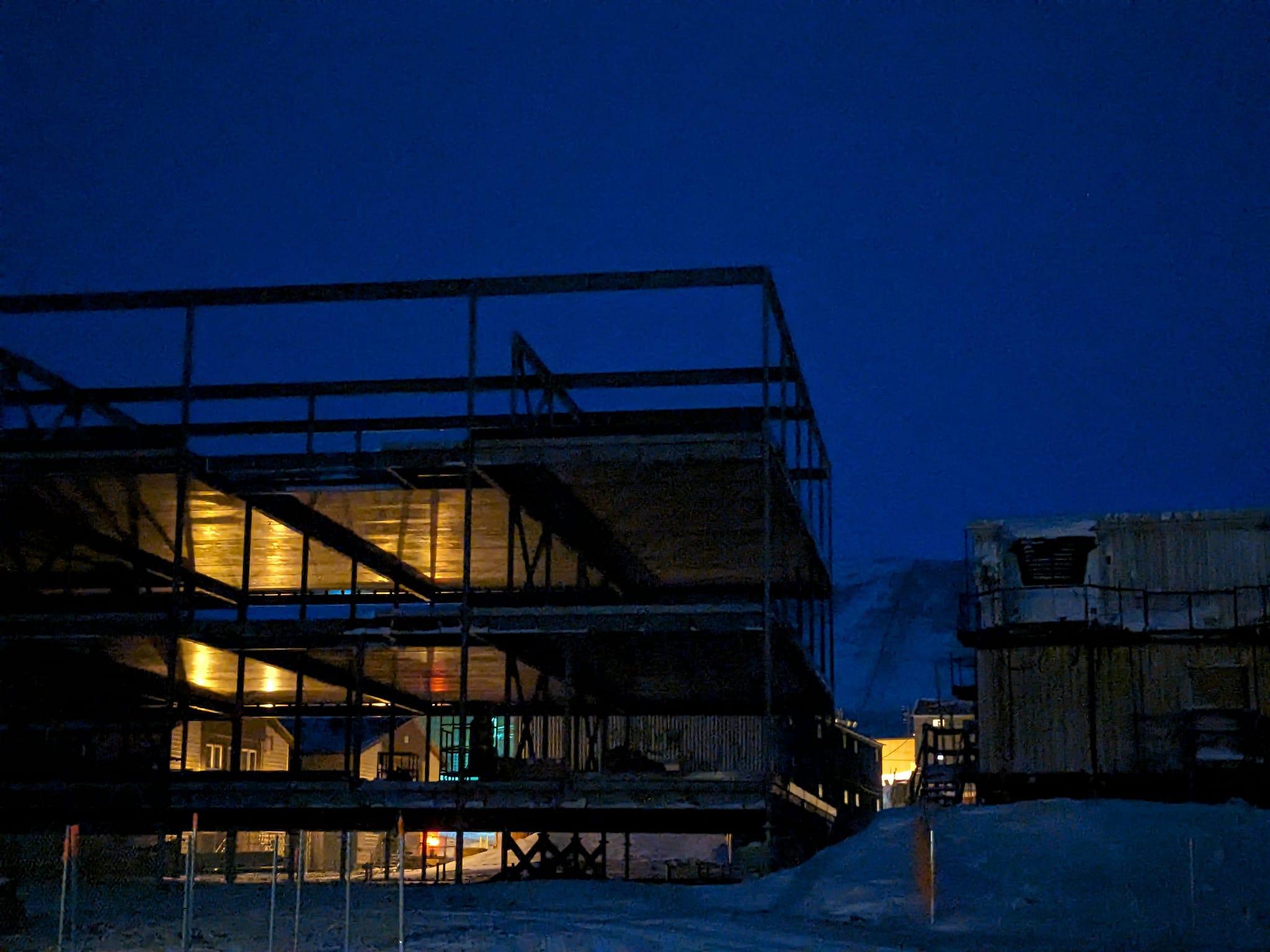
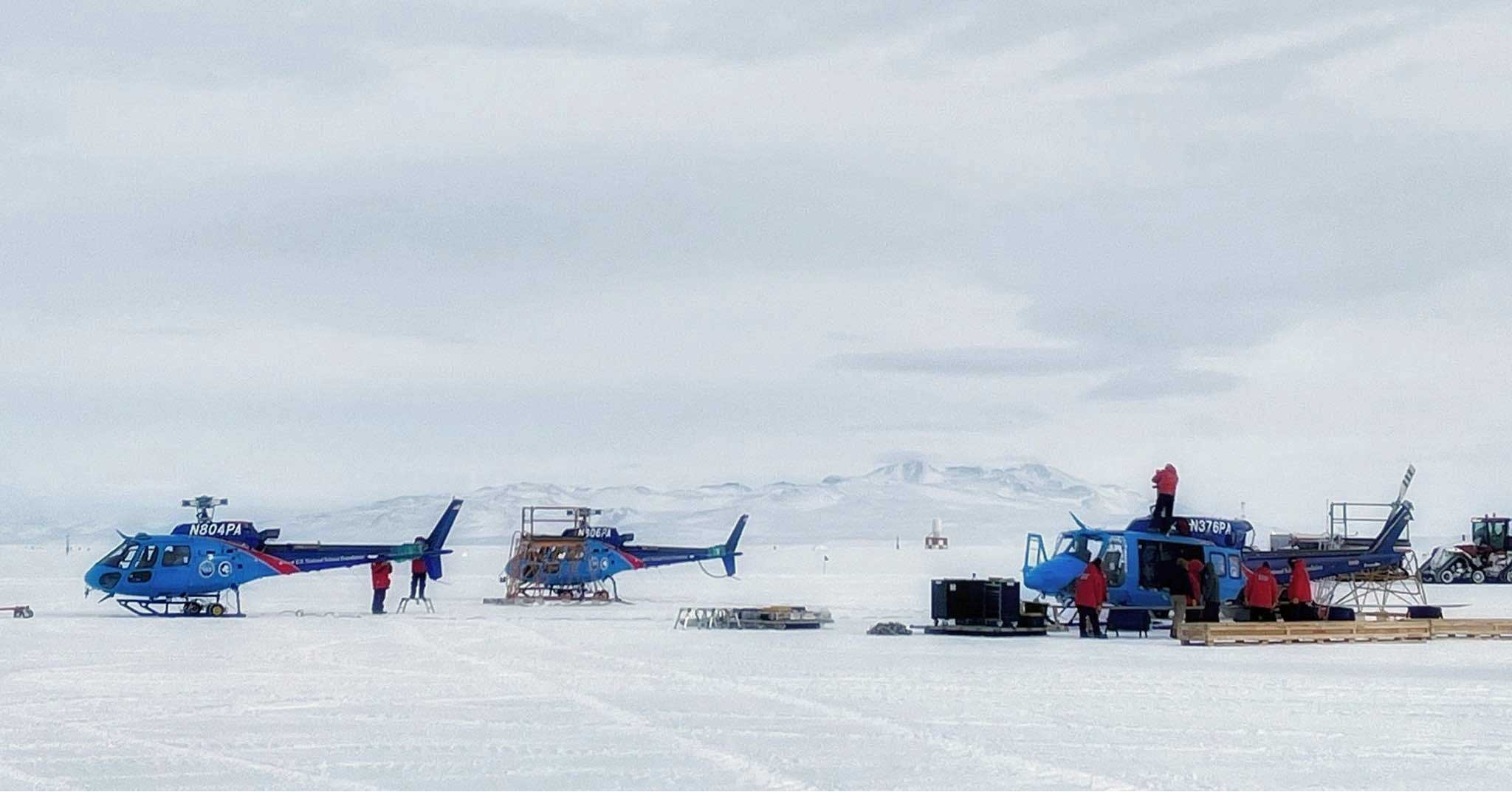
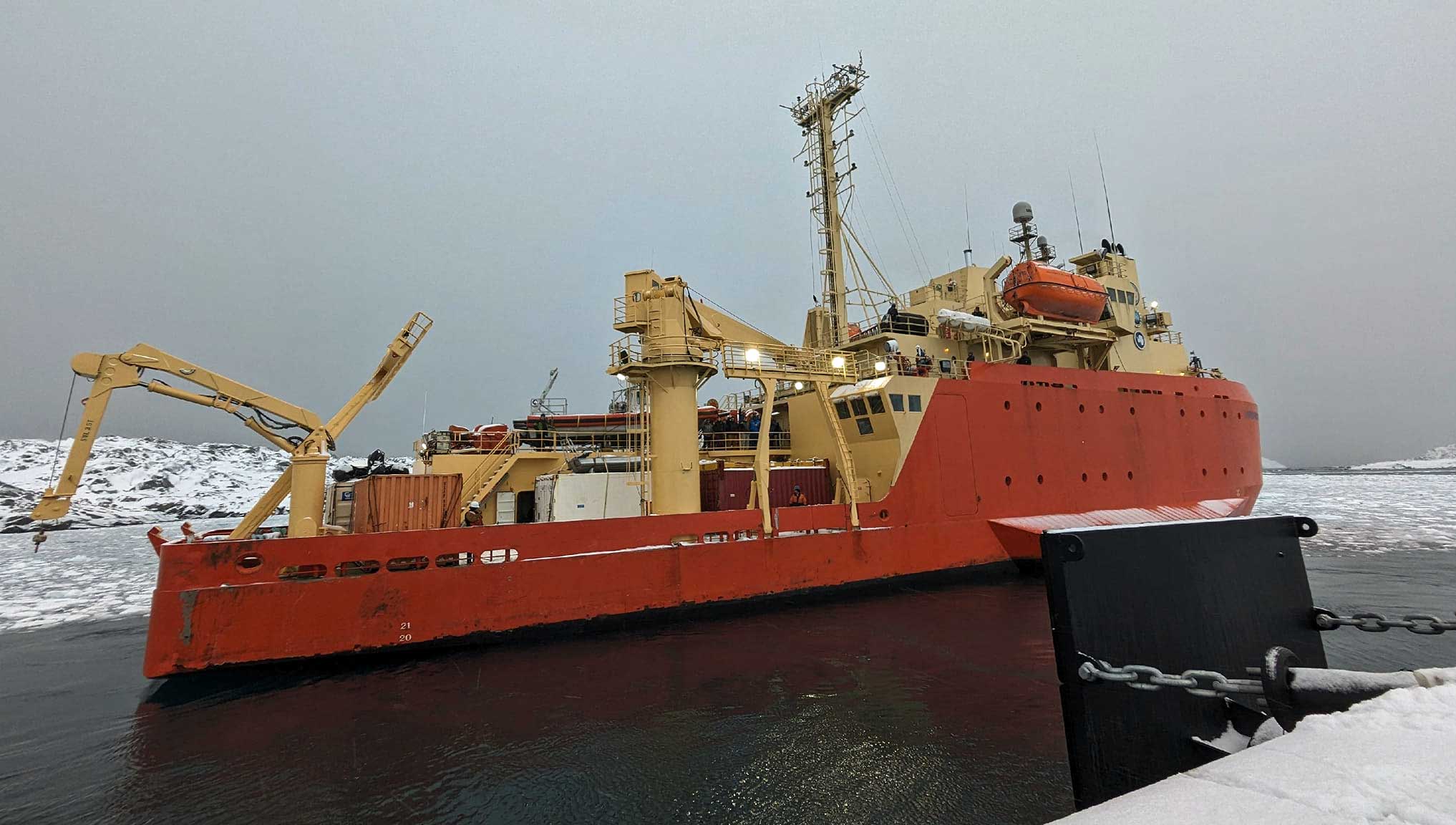
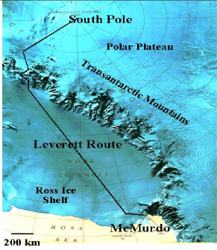
yes, I know it was on the common drive, but jon berry took this picture, click for info
[photo by Jon Berry, click for more!]

NEWS

Yes, as of 20 August we finally have some news on the contract rebid. The three finalists are CH2MHILL, Lockheed Martin, and KBR. Which leaves out the other four bidders: TransPolar (the Raytheon/AECOM joint venture), Antarctic Research Support, the joint venture between EG&G and CSC, Fluor, and ITT Antarctic Services. Hmmm. Hmmm is all I can say at this point. Well, except that tehre is another Antarctic contract out there. NSF has a preliminary inquiry out for the nest Title II inspection contract. Remember, Title II at Pole was what I did in 2005.

Winfly was supposed to start on 13 August...but first there was a mechanical delay, and then some Condition 1 weather in McMurdo. But the first of the 7 flights finally made it in on the evening of the 15th. Here is the latest Antarctic Sun story about these flights.

Important historical stuff from the other side of the continent...the former research vessel HERO has been definitely located in Bay Center, Washington, where the new owner has had it since September 2008. And I do have pictures that friend Jon Lingel took last weekend, yawn, tomorrow.

Bill enjoyed the Antarctic "gathering" 15-17 July, at Paul Dalyrimple's place in Port Clyde, ME. I was not the youngest Polie there...remember that Paul wintered a few years ago in 1958, so his winterover number is 21. The weekend featured lobster and other great food, and many presentations including one from Bob Benson who wintered in 1957...thanks to alphabetical order his winterover number is ONE. There were lots of Antarctic folks there...remember that Paul is the resident editor of the Antarctican Society newsletter, which now has an enhanced web presence documented here.

The Fourth of July weekend was celebrated with a potk dinner...with the whole pig getting grilled on the outdoor barbecue. And it was followed up with a prolonged period of triple digit temperatures...plenty of time for more 300 club members! The temps dipped below -100°F several times during the first few days of July...and the Fourth of July was the coldest on record.

Updated upcoming season schedules (still subject to change of course): WINFLY is scheduled to begin on 13 August with the first of 7 flights roughly other day with the last one on 26 August. Main body deployment will begin with two Australian Airbus pax-only flights on 23 and 24 September. The first C-17 flight (pax/cargo) is scheduled for 28 September. The first LC-130 ski birds are scheduled to arrive in McM on 27 October, and the first Basler to Pole is planned for 15 October.

The 18 June station update in the Antarctic Sun features extensive science coverage by SSL and friend Dana Hrubes, who of course has many more great aurora pictures on his own June web page.

PoliesMidwinters Day has come and gone...the halfway point in the dark season, and perhaps the 2/3 point for folks who showed up at Pole at the beginning of last summer season. The big dinner was on Friday the 18th, with more celebration activities throughout the weekend. Not to mention the annual midwinter greeting (left). Another traditional winter activity, the annual Pole marker design competition, had an amazing TWELVE entries this year, and the winner is...well, it has been selected, and machinist Derek is probably already planning out how to create the hard copy, but the rest of the world will see it revealed on 1 January 2011. This marker is especially significant since it will be the official South Pole marker in December 2011, which of course marks the centennial anniversary of Roald Amundsen's visit. Unlike all of the other folks who arrived at Pole overland, Roald had to bring along his own Pole marker. And I guess I must also point out that Amundsen was the first of only two expeditions that traveled to Pole from the coast using dogs. No, I wasn't around when Amundsen showed up, but I WAS present when Will Steger's expedition showed up with dog teams in December 1989. Oh, in keeping with the season sentiments (and inhibiting attempts to take outdoor group photos) the temperatures have been dipping to the -90s this week.

IceCube in the news again! Yes, on 1 June, the Wall Street Journal found time to cover ths amazing project in between more depressing news about the BP Gulf oil spill and Euro finances. Catch the article while it is available. With photos and video of course!

It is dark. "Astronomical Twilight" (when the sun is less than 18 degrees below the horizon) ended on 12 May. The auroras are out there and they've been awesome! Here's the site for the all-sky camera that displays thousands of images per day.

baby it's cold outside

Contract rebid stuff...no news is no news. The "competitive range determination" and revised milestones for the new multiyear contract, originally promised by the end of March and later by 9 April, have not yet been issued, and there is no word on when (or if) they will be announced. In May? Didn't happen. Earlier, NSF and RPSC finalized the one-year contract extension on 25 March (the 5 April Raytheon press release). Here's my updated page on the contracting process.

It got cold! Surprisingly the temperature dipped into the triple digits on 13 April, as documented by the scroll image at right (thanks Dana Hrubes). The temperature actually stayed below -100°F for 22 minutes...long enough for the first officially sanctioned 300 club running since 2006 (on 2 September 2007 the temperature dipped below -100°F too briefly for anything to happen, and it did NOT get that cold in either 2008 or 2009). The only other year in station history without 3 digit temperatures was 1964. Oh, this is well documented as the second earliest 300 club in station history. (The earliest was in April 1982 as documented by Robert Williscroft.) April 2010 was the coldest recorded April on record, with an average temperature of -80.7°F. On the other hand, 2009 was the warmest year on record (Antarctic Sun article).

The sun set, well, perhaps officially around 0900 on 23 March, well hidden behind murky skies. But of course it was marked by an amazing sunset dinner, extremely well documented by cook Cody Meyer.

Two polar gatherings of note in Boulder this spring...in mid May was the American Polar Society meeting, (detailed information). Earlier, the "Polar Technology Conference" was hosted by UNAVCO on 25-26 March. Here's the web site...the online list of attendees grew rather impressively in the weeks before the meeting, and the presentations are now online. I was around for both meetings, I spent about 7 weeks in Boulder this spring.

At the Polar Technology Conference I learned that a new wind turbine was erected at Pole this past summer...a 2.5 KW unit constructed by Abundant Renewable Energy (ARE) (below left). Here are more details...

give it a spin

More dome details...on 10 March NSF released this extensive press release with photo gallery!

The McMurdo summer season officially ended Friday 5 March, as the last flight, the Australian A319 Airbus, departed with the last few summer folks that had been closing thing up for winter. 197 souls remained for the winter. Flight statistics for this season--in addition to several Airbus missions, there were 59 C-17 flights, 7 RNZAF C-130 flights, and two trial flights by the RNZAF 757 aircraft. Here's the Antarctica New Zealand press release with photos. It turns out that the U. S. Air Force flight season to the ice had been completed the previous week, on 24 February (USAF press release).

Some late summer satellite news, there was an enginering test in January investigating the possible use of the Intelsat SkyNet-4c commercial satellite as a replaccement for the TDRS-F1 satellite which was decommissioned last October. Who at Pole assisted with these tests...well, Shaun Meehan, the 2008 and 2010 winter comms tech of course. The Skynet satellite is slowly drifting into an orbit with increasing Pole coverage. It could be in service in 2011, here is the contract award announcement, and here is an unofficial IceCube blog presentation about the current and future satellite situation. Use of the current TDRSS satellites costs the program over $100 per minute. Speaking of satellites, NSF has recently updated their Pole satellite stuff including lots of information about the current systems as well as a new availability page which can be found here (PDF file). More of my satellite information is below.

no mattresses on this roofGlobal warming? Or is it more appropriate to say global warning? One unarguable fact is that the debate itself is certainly continuing to heat up. Other facts...while the Antarctic Peninsula and coastal areas are warming, as evidenced by the continuing and recent iceberg activity (AAD press release, photos and data and Antarctic Sun article), the South Pole temperatures have actually been getting colder since measurements began in 1957. Winterover meteorologist Tim Markle explains this in this recent video interview posted by Earthgauge. Tim also notes that 2009 by itself was the warmest year on record. More commentary is here in this 1 March blog posting by Britsh meteorologist Andy Russell. What does this mean for this winter's potential 300 club members? Too early to tell.

the last of the dome slugs

Yes, winter 2010 started on 14 February. This date marked the end of a dramatic summer construction seasson--officially the last for the South Pole Station Modernization (SPSM project). The most obvious change of course was the removal of the dome (left, the 15 January final group photo by Forest Banks, taken just before the last few pieces were removed). But elsewhere things are looking a lot more finished thanks to the completion of the "pretty stuff" as C-note used to describe the siding panels. At right is a recent aerial view of the elevated station (thanks to Ethan Good) showing the finished roof, complete with its yellow grating in the science area above B2. Other buildings around the station also received the finished siding, including cryo, RF, and the SPT wing of DSL.

Elsewhere, a bit less dramatic perhaps, the Cheese Palace was made to disappear, and the long-abandoned Hypertats were dug up and relocated, two by summer camp and two at the end of the world. The remediation of the Old Pole site, begun last March, was continued--one possible use for this area that had been considered is a relocated and expanded NGA aircraft parking/camping area. Efforts this summer included a GPR survey followed by some grooming and dragging, but...as happened last March, soft spots opened up, this time sinking a Challenger and the D-8. The equipment was recovered safely, and plans are being reviewed for additional remediation work next summer.

not much leftMore on the dome deconstruction...after a the last big food pull the week before Thanksgiving and some other clearing and preliminary stuff, the structural work began. Skylab went first (photos), and the first top section of the dome was lifted off on 18 December. The rest of my dome photos are here. Other coverage elsewhere--on 10 November the New York Times published this excellent article on 10 November for which I was interviewed. And there is significant Antarctic Sun coverage, this feature in ExplorersWeb, and the OAEA publication Explorer's Gazette (index page). And as for more photos I must also recommend this fresh collection by Forest Banks, available here. Forest provided me other pictures including the progress photo at left.

Science stuff...IceCube had yet another successful summer, it is hard for me to believe this was the penultimate drilling season, especially since when I showed up for my 2005 winter they had successfully completed exactly one hole. This season they started drilling on 4 December, and completed 20 holes on 20 January, 10 days ahead of schedule, for a total of 79. Current plans are for a total of 86 holes, which means only 7 to be drilled next summer. All of the holes through the firn have been completed. Here is the end of season press release...the weekly reports from this past summer are available in the archive section here. Hmmm...what will B1 lounge be like next summer? Faciliies related stuff...the IceCube lab (ICL) got a real stairway to the roof this past summer, and the computer room fire suppression system was mostly installed. Moving to DSL, the South Pole Telescope (SPT) is producing an incredible amount of data about the beginning of the universe...which of course means there have been an incredible number of papers published just in the past year. For more SPT info the best source I can think of at the moment is fellow 2005/2008 winterover Dana Hrubes. At the other end of DSL the new incarnation of BICEP, otherwise known as BICEP2, has cranked up to study other angles of the beginning of the universe. The SPASE-2 hut has been retired from the dark sector, and the cosray detectors have been relocated between the station and ARO. Back behind where the dome used to be, the antenna crew took down some of the old towers, although if you look closely at some of the dome demo pictures, there are still a couple left out there.

no bowling leagues this weekMcMurdo update...some fairly major landscape changes happened or are in progress. Probably the most sentimentally significant was the demo of Building 63, the 1950s vintage Quonset hut otherwise known as the bowling alley...which met its demise due to structural failure (yes, the manual pinsetting equipment was saved). Along with that, the T-site building was removed, along with one of the two remaining nuke plant buildings halfway up Ob Hill. And building 155 was given a distinctive coat of blue paint! I do have pictures.

polie poleThe Antarctic contract...let me say first that major updates are posted on my definitive commentary page about the rebid. On 23 December the Federal Business Opportunities site posted another update, but it is already stale, since it describes a request for the bidders to reformat some of their financial information back in October. There also are some additional Q&A's indicating that there will be some "best and final" negotiations at some point. Since then, on 5 January NSF FINALLY posted a revised schedule on their contract rebid website, although there is not a lot of new detail here either. The Denver Westword news blog put out this story on 30 December with additional information on the lack of information; writer Jonathan Shikes quotes RPSC spokesperson Valerie Carroll..."they received a lot of info from all kinds of competitors and bidders, and it wasn't as easy to compare apples to apples." She explains that RPSC is negotiating for a year extension, and that the award is expected around September 2010.

New Years Day always brings the unveiling of the new Pole marker (right) at a new location, and this year was no exception. Here's my page of photos and info about the marker and the event.

The last weekend in November marked the sad 30th anniversary of the tragic DC-10 crash on Mt. Erebus. The NZ program sent family representatives to the ice for memorial services, a couple of NZ articles are here and here.

women at Pole12 November was the 40th anniversary of the first time women showed up at Pole...six of them all at once. The stories from 2009 and 1969 are here, the date was marked by many of the women on station posing in the photo at left.

1977 Pole Soul sad news...and not new. We just learned that Dave Pluth, one of our 1976-77 GFA's, died last May in Rwanda while on assignment with the national tourism agency (more information).

The history of early season flight delays repeated itself at the end of the 2009 winter. After too many Basler delays, the Hercs showed up, and the first one headed for Pole on Wednesday 28 October...and landed. Visibility was back down to 1 mile (NYANG press release on their deployment). They kept flying to ramp things up and put the station in summer mode quickly. By mid November all of the 2009 winterovers were gone.

The second and third Baslers were scheduled for Friday the 23rd, but the weather observations continued to be bad. Finally one took off...and landed at Pole late Friday afternoon. History repeated itself again, and the stage was set as it were for the First Flight Festival on Saturday evening...a major musical event in the gym.

The first Basler arrived on Monday the 19th, bringing 16 new people and taking 3 winterovers north. The Basler along with a Twin Otter had arrived from Rothera on Tuesday 13 October for a refueling stop on the way to McMurdo. The Basler continued on...the Twin Otter crew ended up staying overnight due to mechanical difficulties--it did not continue to McM until Thursday. Since the Twin Otter was the backup rescue aircraft, the Basler couldn't head south on NSF charter until the Twin Otter was in place. So the opening flight originally headed south on Friday the 16th but boomeranged presumably due to lousy weather and visibility at Pole.

Last year the Canadians on the transit flight brought a few gifts and freshies from Chile (Pisco and oranges!) but this year they did not.

The TDRS-1 satellite was taken out of service on 21 October. From here on, in addition to GOES, the comms will use TDRS 3, 4, 5, and 6 via the SPTR-2 link completed last summer (my complete coverage of the satellite systems and issues past and present is below). TDRS-1 was launched (with difficulty) on the maiden flight of space shuttle Challenger on STS-6 in April 1983.

Bill Spindler was among a number of Polies interviewed in early October for this extensive article "Life in Antarctica is cold — but bloggers there can still get burned" in the Denver alternative weekly newspaper Westword.

hi folks

For some reason or other, a number of past, present and future Polies gathered in Denver at the end of September...including the indubitable Jake Speed along with wife Kathy! At right, some of the documentation... along with an update on Jake, Kathy, and the Jake Speed Fund!

The sun came up! And even visible, thanks to a YouTube video from friend Weeks Heist. The sunrise dinner was 18 September, followed by an open mike night. Meanwhile, a New Zealand Air Force (RNZAF) C-130 has made a medevac flight to McMurdo.

An environmental agreement by Antarctic Treaty nations and the International Maritime Organization (IMO) threatens to force changes to the NSF resupply shipping to McMurdo. The IMO tentatively adopted a measure banning the use of heavy bunker fuel oil by vessels in the Southern Ocean. The measure is a result of recent cruise ship disasters, and it is aimed primarily at that segment of the shipping industry, but it seems that the older US Military Sealift Command vessels used to resupply McMurdo also require heavy bunker fuel. Here's a Science Magazine blog posting.

blue light special on aisle 9

A fresh look at the LO arch (left)...it is now brightly lit and filling up with shelving, thanks to lots of cold weather work by carpenters Todd Adams and Bill Stiner, electricians Robert Dragonfly and Monty Myrtle, project engineer Nathan Greenland, and others to help pull wire and put the erector sets together. Last winter we could not comprehend wire pulling during the winter, but they'd developed a workable system (which requires 7-8 people) to make it happen in cold temps. Soon the contents of the dome will be moved out, some of it to the new shelving units. Many more details are found in a 28 August Antarctic Sun article by correspondent/sous chef Michèle Gentille which includes that LO arch photo by Nathan Greenland.

After two days of cancellations, the first winfly flight into McMurdo finally happened on Saturday 22 August, bringing 120 smiling tanned new faces to the ice. Ten folks departed, but by one friend's estimate this represented a 12% increase in the Antarctic population. This was the first of five scheduled flights, including another of those "night vision" landings that they started last year (Antarctic Sun article).

Late winter fun...the Antarctic Film Festival has happened. Stations all over the continent created short films which had to include required content such as a roll of toilet paper, the sound of a can being opened, and the dialog phrase "Want to buy a dog?" A Rothera winterover shamelessly credits his station's winning video on this blog page, but he also credits one of the amazing Pole creations, a spoof on the making of a trailer for the forthcoming movie "Whiteout," which may actually get released in September. First you need to watch the real studio trailer of the movie here, then have a look at David Barud's vimeo site for the director's cut of the trailer spoof that he and Francis Shiel created, featuring many of the 2009 wo's. And there is also the film "A new FNG." Yeah, I know, this is a historical web site, but these cinema efforts are awesome :) More film links are available on this blog page from Anthony Powell at McMurdo.

The Jake Speed fundraising effort has been getting great support on the ice and elsewhere, but help is still needed. To date the polar community has raised over $29,000! An impressive sum...thanks to all who have contributed! Several weeks ago Jake was discharged from the hospital and is getting outpatient care and therapy near his California home...learning how to use his new bionic features. He still has a long way ahead of him. Please have a look at the fundraising page which includes lots of photos of the Jake we know. I added another page of pictures on 14 June. And Steffen Richter, while traveling through Iran in June, shared things as well with this excellent version. Oh...Steff's travel story is quite something else that is well worth following!

on the ballYes, the 1999 Pole doctor Jerri Nielsen Fitzgerald, who was medevaced from Pole at the end of that winter due to her serious breast cancer...succumbed to the disease on 23 June. Here's the CNN story that broke the coverage, an obituary from the Boston Globe, a press statement from NSF director Arden Bement,, and coverage from the Antarctic Sun. Apparently the memorial service was still pending as of 6 July. Her photo at left was released by NSF in 1999. Here is my original 1999 coverage of her story, which I've updated with the missing press releases.

From 3-5 June I was at the Antarctic Deep Freeze Association reunion in Madison...a great time to get together with Antarcticans and Polies from 1956 to, well, today, yes we had a phone call with Pole, one of the featured events.

Hometown boy makes the papers...well, in this case it is Boulder native and winter site manager Logan Grover, who happened to get covered by the Boulder Daily Camera on 6 June. The reporter actually asked me for info. Anyway, here's the writeup.

News from McMurdo...for the second winter in a row, a significant outbuilding was lost to fire. This time it was the Kiwi A-Frame...a structure I remember from my happy camper course back in 1976. Here's a news story from the NZ Herald with a spectacular photo.

a rose isSadly, Dr. Matt Houseal, who wintered at Pole in 1991 fresh out of residency, was murdered in Baghdad on 11 May...leaving behind a beloved wife and 7 children. we Polies and Palmerites were represented at the funeral...Al Oxton provided commentary and photos, and Dave Gallas sent flowers remembering Matt's time at Palmer Station. Here's the coverage and photos... updated 25 May.

The demise of AMANDA was mistakenly reported here prematurely, but now we have the word...it was turned off at 1511 Monday 11 May, but not before she complained a bit during her final activity. At right, IceCube winterover Erik Verhagen offers a tribute. Now we'll see if we can keep MAPO and the machine shop warm and toasty for the rest of the winter. Up in the heavens, the auroras have been spectacular. I'm a few thousand miles away, but I strongly recommend you check out the amazing sky shots the winterovers are coming up with!

smileFrom Summit Camp on top of the Greenland icecap...where some Polie folks and friends go to work during the off season, comes an incredible story of how a 38-year-old equipment operator I know survived being lost outside in a storm and whiteout for 58 hours. Well...by now you may have figured it out...yes, it was the indubitable Jake Speed. Temperatures were reported as low as -44°F, with 45 knot winds. When things subsided a bit and a search party showed up in a Tucker Sno-Cat looking for signs of his body, to the great surprise of the searchers, Jake actually walked up to the vehicle and climbed in, asking if they were going back to the station anytime soon. A bit later his arrival at the Big House triggered a similar reaction. Here's the NSF press release...his discovery and rescue happened on 18 April. While his body temperature and smile (left) were normal, he was suffering from seriously spinning bladesfrostbitten hands and feet...he was initially medevaced to a hospital in Nuun, the capital of Greenland, and more recently went on to a hospital in California, with his wife. By now he's had lots of surgery, and he did lose his right hand plus both feet, but he is, after all, Jake. Here's hoping that all ends well for this guy!

Also in Madison on 16-17 April--the fifth annual Polar Technology Conference, hosted by IceCube. The meeting purpose was to discuss requirements and planning for polar research. It turned out to be a group of about 40, including yours truly. Bill Spindler was there to discuss such things as the research planning that went into the development of the three permanent stations at Pole, and other such stuff...as well as meeting some other Antarcticans that I haven't seen in awhile. Much of the focus was on power and communications--we're talking something like a few watts of power and a few seconds of connectivity to Iridium, to enable remote data collection sites to operate and stay in touch...along with appropriate computer equipment and software. Since these use alternative energy, my talk included the slightly larger (3KW) wind turbine project at Pole (right) back in 1997. Here is the conference web site. It includes a link to the lists of the participants for this year and the previous years, and the presentations will be posted as well.

climb in

Remembering the old days...something not to be missed is the collection I call The 1974 Negatives...a unique glimpse of life at Pole 35 years ago this winter. mind the stepThe photo at left shows the last version of the main entrance to the original station...still decorated with some commemorative photographs and other items that can be found in the elevated station today (the black item between the two photos of Amundsen and Scott is that marble plaque that was presented to the station on the 50th anniversary of the arrival of these two gentlemen). Anyway, this gallery contains almost 100 pictures from the last winter of the original station now known as Old Pole. Somewhat approprate to mention here perhaps, since the entrance you see here that used to be on the surface has gradually gotten buried. At some point in the 1990's an extension was put on the top of this vestibule--one of those corrugated steel pipe sections with a ladder inside (which had originally been furnished to extend the Dome emergency escape hatch). The top of this ladder used to be on the surface about 10 years ago...but it has gotten pretty deeply buried...so during the week before sunset NSF decided it was time to dig up the entrance and remove that access ladder...it was yanked out with the D7 (right, common drive photo).

Five years later was 1979, the fifth winter in what we called the new station otherwise known as the dome. This year was fairly well documented by one of the NOAA winterovers, John Bortniak. John supplied a number of photographs to the NOAA photo library, a few of which I have used elswhere on this web site, and he also helped me with other information about his winter. In March John presented an IPY/NOAA lecture/webcast as part of IPY entitled "Recollections on Wintering Over at the South Pole 1979" reflecting on the event of 30 years ago. Here is the link to the presentation, which includes a PDF file as well as audio/video podcasts. And here is a photo that John used in his talk--he is at the bottom of the Holy Stairs...some 30+ feet below the floor level of the vestibule in the left hand photo...down at the original snow surface level where the IGY station was constructed.

hooked up at Pole

The bids for the next Antarctic support contract were due on 23 February 2009...so the real backroom bidding, arm twisting, negotiating, and "best and final" offering began...and is still underway in 2010. Not a small process, since the winning effort isn't scheduled to be announced for another 6 months or so. In the meantime, our current contractor Raytheon is cranking up to hire next year's crew...all of the jobs were uploaded to Rayjobs at the beginning of March, and some of these have already been oversubscribed. The link to the jobs page is available on this RPSC site. For whatever reason, the Denver people have decided not to have a main job fair this year, as the hiring climate continues to change. If you're new to the process or even if not, I recommend you poke around on the Antarctic Memories message board to see what others have to say. Down on the ice, the last flight out of McMurdo did so on 22 February...unlike last season there is no "late flight" this year. I'm NYANG, fly meAnd at Pole, in addition to all of the station closing and winterizing tasks, work continued through mid March to put the gunmetal grey cladding on the roof. At left you can see William Stiner (left) and Todd Adams working away on top of A1. This photo is only a small part of the panorama Ella Derbyshire took on 27 February (check out the big version!), she reports that it was -52°F with 9 knots, giving a wind chill in the -80s. Brr. But a nice view!


couch potatoes


Closing time...well, I have to use the title of that Semisonic tune that closed out the final concert of the winter 2008 band last November. 16 February was the day. After a final couple of flights, including the last one (right, photo by Erik Shirokoff from the USAP photo library) the station became home to 43 winterovers...which by coincidence is exactly HALF the size of the 2005 winter crew. The last week all eyes had been on the scroll as the temperature slowly crept down toward the -58°F/-50°C mark which keeps the aircraft away (Steff Richter's weather page). As of 14 February the population was already down in the 40s, with a few folks still to leave and a few folks still to arrive (!). The winter crew--lots of new faces, and only about 4 folks who have previously wintered...and no Bill Spindler this time. At left is a photo from Jude Gregan of a station gathering on the first Saturday evening of winter (21 February)...astute Polies will note that the couch in the foreground contains 3 of the 4 repeating 2008 winterovers on station this year.

all decked outsmall ballIt seems that due to some sort of mixup, there was a shortage of fresh eggs during the 2009 winter...by the beginning of May the last one was gone. Gulp. But elsewhere, the design team passed judgment on the Logistics Facility...conditional occupancy should allow the cargoids to start thinking about moving in eventually...they would do so during the 2010 winter. The back deck didn't count in that review, but it is about done as well. What a couple of months ago was the empty arch was being turned into a real back deck as seen in the mid-January view at left from Dave Smith...and there is siding on the LO facility....Snowcrete was put in for the front deck and it was completed along with rework of the bulkhead and doors. Turns out the back deck required snowcrete as well. Elsewhwere out back, the structure for the SPTR-2 satellite antenna was completed in time for antenna installation and testing, that's what that thing is in the right photo by IT manager Gary Ferentchak from 5 January (USAP photo library); I have more construction photos here. This dome and antenna look suspiciously similar to the ones at Palmer Station--hopefully they'll deal with the demise of the ancient satellites currently in use. Across the runway, IceCube completed all 19 planned strings early, with the last hole drilled on 21 January and the string deployed shortly afterward. The team cleaned up, tested and winterized before leaving things to the winterovers. Oh by the way, on the way out they yanked out a bunch of AMANDA equipment on 3 February, but contrary to what had been reported, the project would continue to run for 3 more months. Read the status updates here; the last summer report for 2009-10 was put up on 10 February.

Some older items of interest (other old news is in the archive):

WIRED magazine has a feature article on Jerry Marty, Carlton Walker, and the station construction in the July 2002 issue. Read about the settlement problems...why the place wasn't considered fit for occupancy for the 2002 winter.

no way southPole land cargo traverses in the works...in October 2002 NSF flew a specially equipped D8 from Christchurch to McMurdo aboard a C17...this equipment was be used to prepare a road south towards the Leverett Glacier, eventually hopefully to Pole. This is to augment the LC-130 flights for station construction cargo as well as for ICE CUBE and forthcoming science projects. More information...

Another new science project...in 2002 a 10-meter submillimeter telescope (up from 8 meters!) that will search for new galaxy clusters and study dark energy. Plans were to attach it to the DSL (dark sector lab) University of Chicago press release. It will have a ground shield that is larger than the Dome (it is being built by Temcor, the same company that built the dome...).

On 8/13/02 NSF had a meeting with potential contractors and suppliers for a possible fiber optic cable to Dome C. Yes, you read that right (news article). Since Pole is way below the horizon for the commercial geosynchronous satellites, one option is to run a cable about 1050 miles to the newly constructed French/Italian Concordia Station at Dome C. (This station is scheduled for full-time occupancy next winter.) The project calls for several years of studies and trials, with the actual stuff involving traverses to get the cable to Pole and Dome C as well as along the route.

Back in mid March 2002 two other iceberg events happened. First, there was another piece of the Thwaites Ice Tongue (75°S-108°W) about 2100 square miles (NATICE which got designated B22. And then there was the collapse of another hunk of the Larsen ice shelf east of the Antarctic Peninsula. The Larsen Ice Shelf B disintegrated within the past couple of months, as evidenced by photos and animations from the NSIDC in Boulder, which also has links to other coverage. The BBC has an excellent article about both events.

Check out the amazing panorama of the inside of the dome by Marc Hellwig--seen here on Dana Hrubes' April 2001 page--warning it may make you dizzy!

The venerable New South Polar Times mailing list moved to a home on Yahoo, thanks to 2001 w/o science tech Andrea Grant. Join the discussion...

The American Society of Civil Engineers (ASCE) had a major feature on the Pole construction in their December 2000 magazine, including articles by Frank Brier and Jerry Marty. That section is no longer online, although I did archive the original article by Dennis Berry and Forrest Braun (BBFM Engineers, Anchorage) which features the details of foundation design and the jacking systems.

Here is the link to my 1999 Doc Jerri medevac coverage. The spectacular April 2001 medevac flight to Pole is covered here. And my archive of other news, links to press releases, and older media coverage is here.

Other Antarctic news sites...

Thepoles.com, freshly enhanced, is operated by Thomas and Tina Sjogren, the "Wearable" expedition folks that trekked to Pole in 2001-02. They are up to date on all the Pole NGA ventures as well as Vinson, Everest, the North Pole, and other similar attractions, and they have an excellent guide for planning your own stroll to Pole.

Brendon Grunewald's old 70 South news site has evolved into the Polar Conservation Organisation, but it still features lots of Antarctic and related news from everywhere, updated daily by anyone, yes, you too.

The Spanish word of the day--yes, insulator foreman Richard "Chico" Perales was back at McMurdo providing a whimsical view of events on the ice for the 2003-04 summer. Archives are here.

The news page of the Antarctic Connection is updated at least twice weekly with current news from and about Antarctica.

The Antarctic Sun is now up in a new format for the 2007-08 austral summer, archives run back to 1996-97, the final year when the McMurdo newspaper was a Navy publication, the Antarctic Sun Times. Before then in the old days it went by other names....here is the story.

 NZ Antarctic Philately pages by Steven McLachlan . The news page features many current events, including many pictures from the various private expeditions at Pole this past summer. He also has information on the 99-00 cruises of the Polar Duke south of NZ in support of German and Italian science projects, 98-99 construction of the new base at Dome C...

The Australian Antarctic Division (AAD) published biweekly newsletters on NGA (private) expeditions, cruises and tourist events. Unfortunately this was discontinued in May 2003, and the archives are no longer available. But they do feature a separate news page for the official Australian program.

The NSF Office of Polar Programs (OPP) page contains links and a search engine. Most recent press releases are also here, scroll to the bottom.

The rest of the story... can now be read online or offline in the newsletter of the Antarctican Society. Highly recommended. Here is the latest contact info as well as the historical background about the group.

[top] | [home]

WEATHER 

The weather...How cold is it really? F or C? Real-time data is still out there in a few places if the satellites and automated weather stations (AWS's) are up. Try your luck, some of these sites might be working now. Unfortunately what all of these automated sites lack is, after all, the WEATHER! The new station has WINDOWS, unlike the old met office in the dome, but the met person still has to walk outside to see everything that is going on.
A current Pole weather page complete with the sat photo, with thanks to Steffen Richter!
The BAS folks have a comprehensive met section with links to weather at Pole and other major stations.
From NOAA, current Pole weather!
from NOAA, various data is here, lots of newer stuff, but not the old weather plots.
from NOAA, detailed hourly data from 1975 to (update!) 2005 (FTP site)
from the NICO AWS 70 miles east of Pole (here's the graphical view).
HENRY, 70 miles north. Take your pick (graphical version).
[the "Clean Air" AWS at Pole was removed in January 2005]
Forecasts from the Weather Underground based on Pole data (best) and the NICO AWS.
Here's the Willy Field AWS near McMurdo (graphical view)
McMurdo weather (Weather Underground)
The Palmer (Bonaparte Point) AWS: text and graphical.
Palmer Station forecast from the Weather Underground
The sunlight/twilight charts for Pole (or anywhere), from 2004/06/08 AMANDA/IceCube w/o Ethan Dicks
The current time with a graphic view of the day-night terminator from space
The U. S. Naval Observatory has many calculators for sunrise/sunset, twilight, the moon, planets etc...
Peter Guest, meteorology professor at the Naval Postgraduate School in Monterey, CA, has an extensive page
of polar met resource links
...as well as information on his polar meteorology course


(here are links to the Antarctic Meteorological Research Center (AMRC, University of Wisconsin) data pages: home page and list of stations).

(Tricks: some wind speeds are given in meters per second. One m/s is about 3.6 km/hr, 2-1/4 mph, or 2 knots. Also, they may use a Julian date, this is the sequential number from starting from 1 through 365 or so. For example, 07031 is January 31, 2007.)

Now about those satellites...dishing it up
For most of this decade until October 2008, things were simple. Pole used the MARISAT/GOES terminal, originally constructed in 2000-01 (left) to communicate with 3 satellites that used to be geosynchronous...here's a May 2000 Christian Science Monitor article about one of them--MARISAT. The RF building and MARISAT/GOES terminal 1 mile south of the station were first turned on in 2001, but they suffered through cold weather mechanical and electronics problems off and on ever since. A radome was added in 2004-05 (photos), but that didn't cure everything...during the 2008 winter the gear drive system failed again...but this time a MacGyver effort by the satcom tech and station mechanics got things rebuilt and running (Antarctic Sun article).

As for the satellites themselves, since they were old the orbits wobbled so the station could see them a few hours a day. MARISAT-F2 (Maritime Communications Satellite), GOES-3 (Geostationary Operational Environmental Satellite, as it was a weather satellite), and TDRS-1 combined [the links for individual satellites here are to Wikipedia articles] gave a window of almost 12 contiguous hours per day with an original theoretical 5 MBPS transfer speed, which has been upgrades several times over the years to more than 60 MBPS. Most of the increased bandwidth goes to data transfer. The oldest of these three, MARISAT-F2 was decommissioned in October 2008 after deterioration in its telecommand link (Antarctic Sun article). This cut the total window by two hours and the bandwidth by a bigger percentage. A year later in October 2009, the TDRS-1 satellite (or TDRSS-1, depending on the NASA contractor and acronym you ball doneprefer--TDRS is Tracking and Data Relay Satellite and TDRSS is Tracking and Data Relay Satellite System) also disappeared from service. The last TWTA (traveling wave tube amplifier) failed, and NASA moved it to another temporary orbit for decommissioning. The last day of service was 21 October 2009 (Spaceflight Now news article). From here on, in addition to GOES, the station is using TDRS 3, TDRS 4, TDRS 5, and TDRS 6 via a second antenna terminal, the SPTR-2 (South Pole TDRS Relay) link completed during the 2008-09 summer (right, a construction photo from Dave Smith; here are more), and here is an April 2009 USAP page with a link to an Antarctic Sun article--lots more info. These satellites will be available for much shorter periods on an ever-changing schedule, and at a greater expense to NSF. Not all of the "above-the-horizon" time (what typically appeared on the old scroll satellite availability page) will actually be available to USAP--this has created a complex daily scheduling job which keeps a friend of mine busy in Denver.

During the 2009-10 summer some field tests were conducted using the Intelsat SkyNet-4c commercial satellite, which is slowly increasing in visibility at Pole. Here is the contract award announcement, and an unofficial IceCube blog presentation about the current and future satellite situation.

In addition to the larger geosynchronous satellites there is, of course, Iridium, which is always available for official/emergency phone calls, and sometimes 24/7 email (for small emails <50k or so). Other resources linked here:

-the recently upgraded and enhanced USAP satellite information pages with links to even more geeky information

-the enhanced satellite visibility chart (PDF file)

-the old link to satellite times and network information from the folks at Richmond (South Miami, formerly Malabar) which now only includes GOES

-a page from AMANDA with descriptions and photos of mostly historical satellites and their earth stations

-an excellent June 2004 virtual tour of the RF building and antenna platform, complete with narrated video, featuring satcom tech Eyvind Flater, brought to you by 2005 and 2005 w/o NOAA tech Glen Kinoshita.

[top] | [home]  

SPORTS (?!)

Once again, it was time for the now-annual Antarctic Treaty consultative meeting. This one, known as ATCM XXXIII, occurred between 3 and 14 May in Punta del Este, Uruguay (3 May MercoPress article). There seemed to be less media interest this time, especially compared to the meeting last April in Baltimore, which featured a speech by Secretary of State Hillary Clinton. There are not a lot of specific agenda details on the official Antarctic Treaty System (ATS) site. The Uruguayan site includes preliminary general agenda and schedule information.

Well, that big Antarctic sports event, what is now known as the Antarctic Ice Marathon (and half and ultra) took place most recently at Patriot Hills on 15-16 December 2009 Pole time, with a total of 20 participants, the field included 3 women and 2 ultra finishers. Temperatures were mostly in the +20s (F) with blue skies and little or no wind. Irishman Richard Donovan (a familiar name in this event) won the 100km ultra in 18:59:56, while the winning 26.2 mile time was 4:46:50 by American Jason Wolfe. Actually that is a fairly respectable time for ordinary marathon runners in the real world. The event will happen again in mid-December 2010, online registration is here for only US$16,950 ex PA.

In addition to the private tourist flights to Patriot Hills, Pole, and the Mt. Vinson base camp operated by Antarctic Network International (ANI)/Antarctic Logisitics and Exploration (ALE), a newer British based company White Desert, has established a tourist destination "Whichaway Camp" near Novo (no, nowhere near the Whichaway Nunataks) with penquin colonies and mountains nearby. Novo is a 3000m blue ice runway originally built by ANI near the Russian Novolazarevskaya base, in the past it was known as Blue One, and on some maps you may see it designated as "White Desert."

What NGA expeditions are up for 2010-11 or later...here's what I know so far...
[For much better coverage, watch thepoles.com, run by Thomas and Tina Sjogren...or the individual expedition websites. Also note that all distances listed below are in statute miles (5,280 feet, 7/8 nautical miles or 1.6 km]. Start with the list of venturers for the 2010-11 season:

The Best of British South Pole
is a 6-man team (from the UK, obviously) led by Manley Hopkinson. They are planning a 2010-2011 unsupported traverse, aiming to set a record for the Beardmore Glacier route, something not many people have tried since Scott and Shackleton. They plan only a 460-mile trip from the base of the glacier, rather than a Ross Island start. Their route info is contradictory, they will stage via either PH or Novo ("White Desert"). Good luck. I've been one of a very few people to fly low up and down the Beardmore in a Twin Otter, and it is rough.
The Last Great Challenge
is the English businessman John Wilton-Davies' next proposed venture with Justin Miles--a planned unsupported round trip in 77 days from Hercules Inlet. This was postponed from last season. John previously tried to reach Pole in 2006-07 but was delayed by weather and problems with a crevasse field, and had to abort his venture when the ALE airlift support season ended.
polarice
is a 4-man British team led by Mike Dann, along with Tim Tottenham, Simon Edmundson and Paddy Scott. They have been training in Greenland for what they call "the longest unsupported transantarctic journey ever undertaken"--a 2010-11 kite-assisted trip starting at Novo and proceeding to the Pole of Inaccessibility, the South Pole, and a finish on the Bellingshausen Sea. Here's their blog.
Bobby del Rosario
announced in April his plans to be the first Filipino to traverse to the South Pole--a one-way trip staged from Patriot Hills scheduled for 2010-11, according to this Good News Pilipinas blog entry.
the British Antarctic Expedition 2011
is a 5-person team consisting of Duncan Cameron, along with Anna Wakefield, Claire Marritt, Alex Toseland and Carl Alvey. They plan another interesting route--a kite-supported trip starting at the base of the Axel Heiberg Glacier, follow Amundsen's route to Pole, and then proceed to Herculese Inlet. This is currently planned for the 2011-12 season. This is Duncan's blog.
Team Polar Attraction
is the three British women Lauren Lee, Mignonette Erasmus and Catherine Baggs. They are currently planning separate trips to both the North Magnetic Pole and the South Pole in 2011-12--they hope to be on site at Pole on the centennial of Scott's arrival in January 2012.
The Amundsen Omega 3 South Pole Race
was a great success last year...they announced a 100th year anniversary race in 2011-12 which is now fully booked with 16 teams mostly from the UK...and they are now taking reservations for a 2012-13 event.
Alastair Humphreys
from England had previously announced a round-trip venture to Pole along with fellow Brit Ben Saunders. This is currently planned for 2011-12. Ben attempted the North Pole in 2010 but had to give up early when one of his fuel containers broke and contaminated most of his food.
Sebastian Copeland and Eric McNair-Landry
have been training in Greenland this spring for a proposed 2011-12 unassisted kite-supported round trip to Pole.
Ben Thackwray
from Leeds, England, completed a fast 2-man ski crossing of southern Greenland in May. He announced that this was a precursor to a planned Pole venture in 2011.
Karen Darke
is a 38-year-old paraplegic Scottish woman who is planning to be the first to reach Pole using only arm power, on a "sit-ski." She has been seriously training in Greenland and Patagonia for a scheduled 2011 or 2012 venture.
Anthony Jinman
announced his involvement in the International Scott Centernary Expedition (ISCE) in early May. This event, scheduled for January 2012, is to be a 290-mile trip from Ross Island to the site of Scott's last tent site, where a commemoration service will be held. Expedition patrons and descendants of Scott's party will be flown to the memorial service--should be an interesting bit of logistics. Anthony had planned a trip to Pole in 2009-10 which was cancelled due to lack of funds. Anthony previously announced a North Pole trip for the boreal spring of 2010, which he successfully completed on 22 April 2010, and he was a member of the Hannah McKeand venture from the Ronne-Filchner Ice Shelf, reaching Pole on 3 January 2009 (these trips are described on his main site).
Hans Wijnand and Jacob Slooff
from the Netherlands are planning a "kite buggy" Antarctic crossing for 2011-12, starting at Novo, stopping at Pole, and continuing to the vicinity of Mt. Vinson, where they will be joined by a third expeditioner for a summit attempt. The lightweight kite buggies will also be manhauled as needed.

Here are my records of the 2009-10, 2008-09, 2007-08, 2006-07, 2005-06, 2004-05, 2003-04, 2002-03, 2001-02, 2000-01 and 1999-2000 NGA expeditions. Keep in mind that the older expedition web sites tend to disappear. The 2000-01 Russian "Millennium Expedition" (skydiving/ballooning) is covered on a separate page.

[top]

News archive page | Return to home page